• Skip to primary navigation
  • Skip to main content
  • Skip to footer

Top Header bar

(888) 510-3453 [email protected] DEMO DYNAFILE
DynaFIle

DynaFile

Scan to Cloud HR Document Management Solutions

  • Tour
  • Solutions
    • Human Resources
      • Electronic Employee Onboarding
      • Electronic Employee Files
      • HR Employee File Management
    • Education
      • Electronic Education Onboarding
      • Electronic Education Files
      • Education File Management
    • Healthcare
      • Electronic Healthcare Onboarding
      • Electronic Healthcare Files
      • Healthcare Filing Management
    • Accounting
    • Contract Management
    • Manufacturing & Distribution
    • Real Estate
    • Staffing
    • Other Solutions
  • Features
    • Meet AIDI
    • Cloud Workflows
      • Electronic Signatures
      • Secure File Sharing
      • Version Control
    • Cloud Storage
      • Document Indexing
      • Document Retrieval
      • Segmented Access
      • Drag and Drop Drive
    • Scanning Automation
      • Barcode Recognition
      • Batch Processing
    • Automated Onboarding
    • Seamless Integrations
  • Compliance
  • Integrations
    • Paylocity
    • PandaDoc
    • DocuSign
  • Resources
    • Case Studies
    • ROI Calculator
    • Press Releases
    • HR Guides
      • HR DMS Buyerโ€™s Guide
      • Cloud-Based HR Document Management
      • HR Records Management Best Practices
      • Onboarding with Cloud HR Filing
      • Document Storage vs. Management
      • Digitize HR Paper Files
      • HR Compliance Checklist
    • Blog
    • FAQs
  • Company
    • Advocacy Program
    • Customers
    • Partners
    • History
    • Careers
    • Contact Us
    • Security & Certifications

Workflow Integrations

DynaFile Features Your Team Is Probably Not Using

May 27, 2026 by Andrew Roberts

The features already built into your site, just waiting to be used.


DynaFile features

Last year, we surveyed our clients to better understand how theyโ€™re using DynaFile and more importantly, to learn how we can make the system work even harder for them.

One surprising pattern emerged: clients were frequently requesting features that were already built into their site! So, we put together this list of DynaFile features your team may not know exist, including some of the most commonly overlooked, and genuinely useful, tools available to you right now.

As always, your dedicated account manager is ready to help. Just reach out directly with any questions or to get any of these features set up.


DynaFile Features: Finding & Viewing Documents

Sort Search Results in the Registered State

Hereโ€™s one thatโ€™s easy to miss but impossible to go back from once you know about it. When youโ€™re reviewing documents in the Registered State, your results arenโ€™t stuck in a fixed order. Theyโ€™re fully sortable on the fly.

Click any column header (such as Creation Date or Document Type) to sort by that field. A small arrow appears next to the active sort column. Click the header again to flip the order, so you can instantly see the most recently added documents first with just two clicks.

Pro tip: Sort by Creation Date in descending order at the start of each week to catch anything new added since your last review.

Custom Document Filenames After Download

When you download a document from DynaFile, the default filename is a system-generated code – which isnโ€™t very helpful once the file is sitting in your downloads folder.

The good news: we can fix that.

We can configure your site so downloaded files are automatically named using any combination of your document indexes. For example:

EmployeeName_DocumentType_Description_CreationDate

Just let your account manager know what naming convention works best for your team, and weโ€™ll set it up.


DynaFile Features: Working with Documents

Upload a Document Directly to an Employee File

Tired of navigating multiple steps just to add a document to an employee record? Once this feature is enabled by an admin user, registering a file becomes as simple as drag and drop.

Search for an employee file in the Registered State, then drag your new document directly into their file. DynaFile will automatically pull in the employeeโ€™s data to populate the document fields wherever possible, saving you from redundant manual entry.

Watch the walkthrough video starting at 21:05 (Additional Updates) for more information.

Share Documents Directly from DynaFile

Need to get a document to someone outside your organization? You donโ€™t need to download it first. Admin users can enable flexible sharing options for some or all users, including:

  • Direct shareable links
    • Private or Public
    • Links can be protected by a password or set to expire on a specific date
  • Email documents as an attachment directly from DynaFile, without ever leaving the site

No downloading needed to send a document, everything stays in one place, with a clear audit trail.


DynaFile Features: System & Administration

Archive Historical Records and Legacy Files

Every DynaFile site includes access to the โ€œDynaFile Archive Toolโ€ which is designed to help you keep your Registered Document State, clean, compliant and manageable over long periods of time.

Using the Archive Tool, administrators can copy or permanently purge documents from the system based on any site index, such as Status, Termination Date, or Document Type.

Whether youโ€™re offboarding a large group of employees, doing a year-end records cleanup, or migrating legacy files, this tool handles it efficiently.

Document Integrations

DynaFile is built to work with your existing HR tech stack – not in a silo. We support integrations with e-signature, ATS, onboarding, and payroll platforms, so documents can flow seamlessly between systems without manual re-entry.

Some of the platforms we commonly integrate with include:

  • DocuSign
  • PandaDoc
  • iCIMS
  • Workday
  • ADP
  • UKG
  • Paylocity
  • Rival HR
  • Taleo

Donโ€™t see your preferred platform listed? Please reach out anyway, we may already support it, or we can explore options together.


Ready to unlock any of these features?

Contact your dedicated account manager or reach out to our support team.

Weโ€™re always happy to help.


Not a DynaFile customer yet?

See how DynaFile helps HR teams manage employee files, stay compliant, and work more efficiently. Learn How DynaFile Works.

Filed Under: Digital Transformation, Electronic Filing, Record Compliance, Workflow Integrations

How Houchens Insurance Group Automated New Hire Document Filing with DynaFile + Paylocity

May 21, 2026 by Andrew Roberts

When a growing insurance organization operating across all 50 states found itself buried in manual new hire document workflows, the fix wasn’t hiring more HR staff. It was finally getting the right two tools to talk to each other.


DynaFile Paylocity integration

Managing new hire onboarding documents at scale looks manageable on paper. Then the hours start adding up.

Houchens Insurance Group (HIG) is not a small operation. Built from five legacy agencies into a single employee-owned insurance partner headquartered in Bowling Green, Kentucky, HIG serves businesses and individuals nationwide. With nearly 500 employees and a growing workforce, their HR document management needed to keep pace.

For a while, it couldn’t.


The Problem: Every New Hire Document Was a Manual Project

Before HIG connected DynaFile to their Paylocity HRIS, their onboarding document workflow looked something like this: retrieve completed new-hire paperwork from Paylocity, save it locally, upload it to DynaFile, then track completion across both systems separately.

Repeat that for every new hire. Every acknowledgment. Every job description update.

It was time-consuming, frustrating, and prone to the kind of small errors that quietly snowball into bigger compliance headaches. And as HIG’s workforce expanded, the administrative drag grew with it.

The challenge became especially visible during company-wide initiatives. When HIG needed to roll out an updated employee handbook, the process required sending mass emails, tracking responses in Excel, collecting signed documents one by one, and manually uploading each to the system. What should have been a routine communications task became a multi-day administrative project for the HR team.


The Solution: Automated New Hire Document Filing from Paylocity into DynaFile

HIG already had two strong platforms in place. What they were missing was the connection between them.

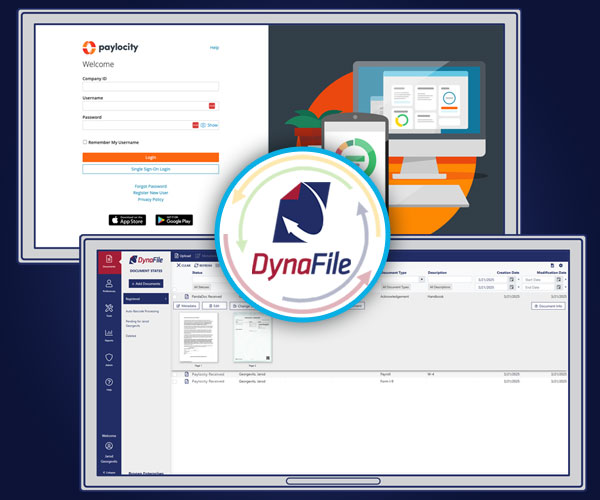
By activating the DynaFile + Paylocity integration for automated onboarding document management, HIG transformed its HR document management from a series of manual handoffs into a fully automated workflow that begins the moment new-hire paperwork is completed.

Now, when a new hire completes their onboarding paperwork in Paylocity, DynaFile automatically takes it from there. Employee folders are created, and new hire onboarding documents, job descriptions, and acknowledgments are organized and filed in real time. Everything is immediately accessible to the HR team without anyone having to initiate the process.


How the DynaFile + Paylocity Integration Automates New Hire Document Filing

The integration pulls completed new-hire onboarding documents directly from Paylocity into organized, standardized employee folders in DynaFile, eliminating the need for manual retrieval, local storage, or re-uploading. Onboarding paperwork, offer letters, job descriptions, signed acknowledgments, and onboarding forms are consistently categorized and filed in every new hire record.

The handbook acknowledgment rollout, which once consumed hours of spreadsheet tracking, is now handled entirely through automated, background bulk document processing, allowing the HR team to focus on other tasks.

DynaFile’s multi-employee file view added another layer of efficiency, letting HR staff view and compare onboarding records across multiple employee folders at once rather than toggling between files one at a time.

Beyond speed, the automation creates consistency. Every new hire file is built the same way, every time. That standardization matters for compliance and audit readiness because it reduces the risk of missing documents, misfiled records, and inconsistent folder structures.

For teams managing electronic employee onboarding at scale, cloud-based HR filing systems enable keeping every onboarding file complete, consistent, and accessible without adding administrative overhead as headcount grows.

A Game-Changer for Efficiency and Accuracy

The DynaFile + Paylocity integration has transformed our document management by automating time-consuming tasks, reducing errors, and speeding up processes. It’s a game-changer for efficiency and accuracy, allowing us to focus on more strategic work.

Jordan Meador, Talent and Culture Business Partner, Houchens Insurance Group


The Results: Real Numbers, Real Time Savings

The impact at HIG wasn’t just qualitative. Before the integration, manually pulling, organizing, and filing new hire onboarding documents for 96 new hires accounted for roughly 48 hours of administrative work each year. Today, the same process takes 10 minutes or less per employee and runs largely without human intervention.

Across HIG’s nearly 500-person workforce, those efficiencies compound quickly. New-hire filing workflows are now 100 percent automated from Paylocity to DynaFile. Hundreds of hours of manual document work have been eliminated annually. And the HR team has reclaimed time that used to be lost to administrative overhead.

By the numbers

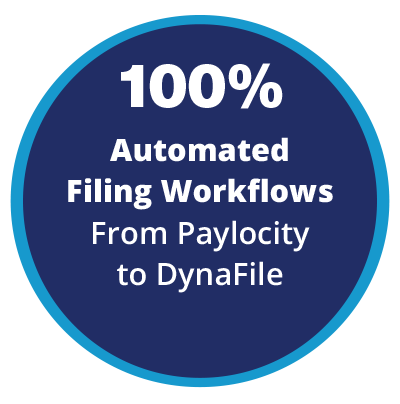
  • 100% automated new hire filing workflows from Paylocity to DynaFile
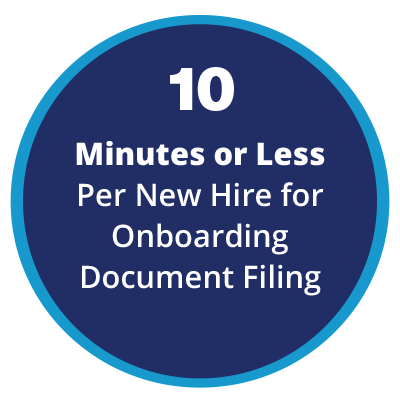
  • 10 minutes or less per new hire for onboarding document filing
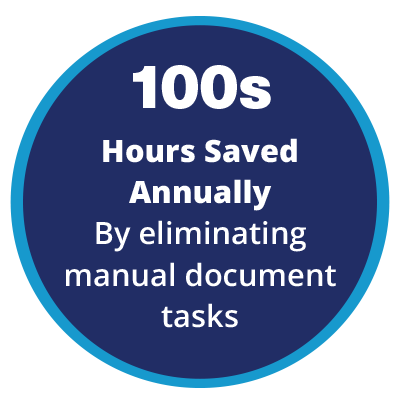
  • Hundreds of hours saved annually by eliminating manual document tasks

100-Percent-Automated--Filing-Workflows-From-Paylocity--to-DynaFile
10-Minutes-or-Less--Per-New-Hire-for--Onboarding-Document-Filing
100s-Hours-Saved--Annually-By-eliminating--manual-document--tasks

HIG is already planning the next phase, expanding DynaFile automation to manage annual training certificate tracking at scale.


Why This Matters for Paylocity Users

If your organization runs Paylocity and you’re still manually managing the new hire document side of HR, you’re doing twice the work. The DynaFile + Paylocity integration is designed specifically to close that gap: pulling completed onboarding files directly from Paylocity, building out organized employee file structures in DynaFile, and keeping everything audit-ready without requiring manual coordination between the two systems.

For HR teams managing electronic employee onboarding at scale, that kind of HRIS integration isn’t a luxury. It’s how you keep up without growing your administrative headcount as your workforce grows.

Explore the DynaFile + Paylocity integration for automated onboarding document management


Built for HR Teams Who Need More Than Storage

Document management isn’t just about storing onboarding files. It’s about making sure the right records are filed correctly, accessible instantly, and consistent enough to withstand compliance questions.

DynaFile’s automated onboarding integrations, cloud-based employee file management, and HR records management capabilities are built to reduce the manual effort HR teams carry while giving them better control and visibility over the records they’re responsible for.

HIG’s story isn’t unique. HR teams across insurance, healthcare, education, and other compliance-driven industries are discovering that the gap between their HRIS and their document management system is one of the most fixable sources of wasted time and compliance risk in their operations.


Why Automating New Hire Document Workflows Matters Now

HR teams are increasingly being asked to do more with fewer administrative resources. As onboarding volumes increase and compliance expectations grow, disconnected HRIS onboarding workflows quietly create major operational inefficiencies. Manually bridging the gap between an HRIS and a document management platform introduces filing errors, delays access to employee records, and limits the ability to scale as the workforce grows.

Integrating new hire onboarding document workflows between Paylocity and DynaFile eliminates those gaps while improving consistency, speed, and visibility across HR operations from day one of every new hire’s experience.


See How It Worked for HIG

Explore how DynaFile can help you eliminate paper, streamline operations, and create a more efficient, compliant, and connected HR team just like NANA North.

Want the full breakdown of what HIG was dealing with before the integration, what changed, and how the results stacked up?

Download the full Houchens Insurance Group HR automation case study

DOWNLOAD CASE STUDY

Ready to see what a connected, automated new hire document workflow looks like for your organization?

See how DynaFile works for automated onboarding document management and HRIS integration

Already seen enough? Schedule a personalized DynaFile demo.

Filed Under: Digital Transformation, Electronic Filing, Record Compliance, Workflow Integrations

Why HRIS Platforms Still Leave Employee Documents Disconnected And How the Paylocity + DynaFile Document Management Integration Solves It

February 25, 2026 by Andrew Roberts

HRIS platforms like Paylocity centralize workforce data, but employee documents often remain fragmented across systems. Learn how integrating HRIS platforms with DynaFile creates a secure, compliant employee document management layer.


HRIS document management integration

Modern HRIS platforms have transformed payroll, benefits administration, onboarding workflows, and workforce management. Systems like Paylocity centralize employee data and streamline day-to-day HR operations. However, most HRIS platforms are not designed to function as employee document management systems, leaving critical HR documents disconnected from the system of record.

But there is still a critical gap in many HR technology stacks:

Employee documents often remain disconnected from the system of record.

Even with a robust HRIS in place, organizations frequently store employee files in shared drives, email inboxes, legacy servers, or physical filing cabinets. This disconnect introduces compliance risk, manual work, and audit uncertainty.

It is not a payroll problem.
It is not a workforce data problem.
It is a document management problem.

And it is one that many organizations do not realize they still have.

Without a structured employee document management system, organizations often struggle to keep personnel records organized, searchable, and compliant.


The Hidden Gap in HRIS Platforms


HRIS systems are designed to manage employee data. They track compensation, job changes, benefits elections, timekeeping, and workforce analytics.

But they are not purpose-built document management systems.

As a result, HR teams often face:

  • Manual downloading and uploading of employee documents
  • Inconsistent folder structures across departments
  • Limited search capabilities during audits
  • No centralized metadata framework
  • Retention policies managed outside the HRIS

Over time, this creates operational friction and compliance exposure. As organizations grow, expand across states, or support hybrid workforces, the risks increase.


Why Employee Document Management Requires Its Own Layer

Employee records are not just files. They carry legal, regulatory, and operational weight.

I-9s, W-4s, offer letters, disciplinary records, benefits documentation, certifications, and performance documents must be:

  • Securely stored
  • Properly indexed
  • Easily searchable
  • Access-controlled
  • Retained according to regulatory timelines

A true employee document management system provides:

  • Structured indexing and consistent metadata
  • Automated retention schedules
  • Role-based access controls
  • Full audit trails
  • Secure, cloud-based access for distributed teams

This is where the concept of an employee document layer becomes essential.


The Employee Document Layer for HRIS Platforms

Instead of forcing HRIS platforms to function as document repositories, leading organizations are implementing a complementary solution: a document management system that integrates directly with their HRIS.

DynaFile serves as the employee document layer for modern HRIS platforms.

By integrating with systems like Paylocity, the Paylocity + DynaFile integration connects trusted employee data with structured, compliant document storage and automated employee document management.

The result:

  • The HRIS manages employee data and workflows
  • DynaFile manages employee documents, compliance, and retention
  • Integration eliminates manual file handling

Each system performs the function for which it was designed, creating a stronger, more scalable HR technology stack.


How the Paylocity + DynaFile Integration Works

When using the Paylocity + DynaFile integration, employee data automatically structures document folders and organizes HR documents into secure digital personnel files.

  1. Employee data automatically structures document folders in DynaFile
  2. Documents generated through HR workflows are automatically categorized and routed
  3. Files are indexed using consistent metadata for fast retrieval
  4. Retention schedules and role-based permissions are applied automatically

For example, when a new hire completes onboarding in Paylocity, documents such as W-4s and I-9s are automatically filed in the correct employee record within DynaFile. This removes the need for manual downloading, naming, and sorting.

During an audit, HR teams can locate employee records instantly by employee name, document type, or compliance category.


Beyond Paylocity: Building a Connected HR Document Ecosystem

While the Paylocity integration demonstrates how HRIS data and employee document management can work together seamlessly, the employee document layer extends beyond a single platform.

DynaFile integrates with leading HRIS, HCM, and workforce management systems to ensure employee documents remain structured, searchable, and compliant regardless of the technology stack.

Supported integrations include platforms such as:

  • Workday
  • ADP
  • UKG
  • SAP
  • Ceridian Dayforce
  • Oracle Taleo
  • iCIMS

In addition to HRIS platforms, DynaFile connects with leading e-signature and digital workflow integrations, including DocuSign, PandaDoc, Adobe Acrobat Sign, and signNow, ensuring employee documents can be securely signed and automatically filed into structured personnel records.

By integrating across HRIS and e-signature systems, DynaFile ensures that employee documents can be:

  • Generated digitally
  • Signed securely
  • Automatically filed
  • Indexed using structured metadata
  • Retained according to compliance requirements

Instead of fragmented storage across platforms, organizations gain centralized, audit-ready employee document management across their entire HR ecosystem.


Why This Matters Now

Compliance requirements are expanding. Multi-state employment regulations add complexity. Remote and hybrid teams require secure, cloud-based access to sensitive employee records.

Manual document handling does not scale.

Organizations that separate HRIS data management from structured employee document management gain:

  • Reduced compliance risk
  • Faster audit response times
  • Improved operational efficiency
  • Stronger internal controls
  • Greater visibility across departments

The HR technology stack is evolving.

And the employee document layer is becoming a necessary component.


Announcement

DynaFile recently announced the launch of its Paylocity integration, designed to eliminate disconnected HR documents and automatically organize employee records into structured digital personnel files.

You can read the full press release here.


Modernize Your Employee Document Management

If you are using Paylocity or another HRIS platform, consider whether your employee documents are as structured and secure as your workforce data.

DynaFile helps organizations centralize, index, secure, and manage employee records through intelligent integrations designed to eliminate manual filing and strengthen compliance.

Explore the Paylocity integration to see how the employee document layer works in practice, or schedule a personalized demo to evaluate how DynaFile fits into your existing HR technology stack.


Frequently Asked Questions About HRIS Document Management Integrations

Q: What is an HRIS document management integration?

A: An HRIS document management integration connects employee data from an HR system like Paylocity with a structured document management system. This allows employee records to be automatically organized, indexed, secured, and retained in compliance with requirements.

Q: Why canโ€™t an HRIS manage employee documents on its own?

A: HRIS platforms are designed to manage employee data and workflows, not to serve as full-featured document management systems. Dedicated employee document management software provides structured indexing, metadata, retention automation, and audit trails that go beyond standard HRIS capabilities.

Q: How does integrating Paylocity with DynaFile improve compliance?

A: By automatically filing and indexing employee documents using consistent metadata and retention rules, organizations reduce manual errors and improve audit readiness. Role-based access controls and audit trails further strengthen compliance.

Q: What types of documents can be managed through an HRIS integration?

A: Common employee documents include I-9s, W-4s, offer letters, onboarding forms, benefits documents, performance records, certifications, and policy acknowledgments.

Filed Under: Digital Transformation, Record Compliance, Workflow Integrations

Say Goodbye to Paperwork Overload: How an HR Document Management System Reinvents File Management and Compliance

November 24, 2025 by Andrew Roberts

A modern HR document management system that speeds up file retrieval, automates compliance, and gives HR more time for people.


HR document management system

If you have ever searched for a missing onboarding form after office hours or prepared for an audit with a stack of paper on your desk, you know how demanding HR filing can be. A modern HR document management system replaces those stressful moments with organized digital files, faster retrieval, automated compliance alerts, and structured onboarding workflows.

Centralized storage, automated indexing, and integrated e-signature tools help HR recover time, prevent errors, and keep sensitive information secure. MorningStar Senior Living reduced document retrieval from hours to seconds. NANA North digitized thousands of files across remote locations and strengthened compliance statewide.

If your organization wants to reduce paperwork, protect employee information, and move through audits confidently, this guide explains how a modern HR file management system delivers real outcomes.

Table of Contents

  1. The cost of paper and disorganization in HR
  2. How a modern HR document management system works
  3. Retrieve any employee file in seconds with centralized, secure access
  4. Cut onboarding time through HRIS, ATS, and e-signature integration
  5. Compliance and I-9 automation without the stress
  6. A simple plan to move to electronic employee files
  7. Why this HR document management software stands out
  8. See it in action

1. The cost of paper and disorganization in HR

Manual HR filing is expensive, time-consuming, and risky. Paper documents arrive from many sources, digital files sit in shared drives, and employees send required forms through email. Industry research referenced by SHRM shows that HR professionals spend a large portion of their time on administrative tasks such as retrieving documents, correcting errors, and tracking compliance.

This scattered model leads to:

  • missing or outdated documents
  • inconsistent versions
  • delayed onboarding
  • privacy gaps
  • increased audit risk

When an I-9 form, certification, or medical document is misplaced, the issue quickly becomes a compliance concern. And when an auditor requests documents, HR often loses hours searching through filing cabinets, shared drive folders, or email chains.

Modern HR teams improve efficiency and reduce risk by using a structured employee file management system that keeps every document organized and accessible in seconds.

Explore HR file management>

2. How a modern HR document management system works

A fully digital HR document management system consolidates every employee file into one secure location. Rather than looking through multiple storage locations, HR retrieves exactly what they need within seconds.

Centralized, secure storage

With role-based and document-level permissions, HR leaders, managers, and benefits teams can access only the information they are authorized to view. Sensitive records such as medical files and I-9s stay in protected partitions.

Digitizing without manual sorting

Barcode-driven batch scanning and automated metadata tagging transform mixed paper folders into organized electronic employee files. HR avoids hours of manual sorting and ensures greater consistency.

AI-powered document classification

AI assistance recognizes document types, applies metadata, and routes files into the correct folders. This reduces manual filing errors and helps maintain structure as documents arrive from many sources.

Learn more about AIDI, DynaFile’s AI Document Intelligence>

3. Retrieve any employee file in seconds with centralized, secure access

When every file (onboarding forms, performance documents, certifications, I-9s, medical files) lives in one structured location, HR can find what they need immediately, instead of searching through paper folders or drive structures, HR selects an employee’s name and retrieves any file with a click.

Real outcome examples

MorningStar Senior Living reduced document retrieval time from hours to seconds and eliminated paper files across multiple locations. Even multi-site teams can now respond to file requests instantly.

MorningStar Case Study>

NANA North digitized more than 3,000 employee files from remote communities, providing HR with consistent access and improving compliance company-wide.

NANA North Case Study>

Daily outcomes HR teams report:

  • Retrieval in seconds
  • Fewer missing documents
  • Improved supervision and review cycles
  • Greater accuracy across all records
  • Easier onboarding follow-up
  • Reduced paper handling and email attachments

4. Cut onboarding time through HRIS, ATS, and e-signature integration

A modern HR document management system integrates with ATS platforms, HRIS systems, payroll, and e-signature tools. Documents flow automatically from one system to another, eliminating repetitive data entry.

Examples of outcomes HR teams experience:

  • Onboarding packets return completed and auto-tagged
  • New hires complete all forms electronically
  • HR stops entering the same personal data multiple times
  • Forms move directly from ATS to HRIS without manual touch
  • Day-one readiness improves dramatically

When documents return already organized, HR spends less time chasing missing signatures and more time supporting employees.

5. Compliance and I-9 automation without the stress

Compliance is one of HR’s most critical responsibilities. A modern HR document management system must support federal, state, and industry regulations with built-in safeguards.

Automated I-9 retention and purge rules

I-9s must be retained for three years after hire or one year after termination, whichever is later, according to USCIS guidance. Automated retention workflows reduce errors and ensure timely cleanup.

HIPAA and PHI protections for medical records

Medical information should be stored separately with strict access controls that align with HHS privacy and security rule expectations.

GDPR and CCPA support for access and deletion requests

Under Articles 15 and 17 of the GDPR, employees can request access to or erasure of their personal data. The California Consumer Privacy Act (CCPA) grants similar rights in the United States.

Security controls that matter

A compliant HR document system supports:

  • encryption in transit and at rest
  • multifactor authentication
  • single sign-on
  • role-based and document-level permissions
  • immutable audit trails
  • version control
  • automated credential expiration alerts

6. A simple plan to move to electronic employee files

Transitioning to digital files does not require disruption. Many organizations use a phased process:

Step 1. Review your current files

Identify required documents, spot duplicates, and mark what is missing.

Step 2. Digitize paper with batch scanning

Barcode cover sheets and automated indexing convert mixed folders into structured digital files.

Step 3. Define retention rules and permissions

Set rules by document type and assign role-based access to ensure consistency.

Step 4. Train the team using simple workflows

When uploading, tagging, and retrieving files is intuitive, adoption is quick.

Step 5. Monitor and refine

Reporting tools highlight missing documents, expiring credentials, and areas needing adjustment.
The transition becomes less about replacing a system and more about strengthening HR’s operations.

7. Why this HR document management software stands out

A modern HR document management system delivers measurable benefits:

AI Document Intelligence (AIDI)

Helps classify documents, apply metadata, and route files automatically to reduce manual filing.

Hybrid capture across all sources

Paper, email attachments, digital uploads, scanner imports, and e-signature packets arrive in one structured place.

Deep system integrations

Bi-directional connections between ATS, HRIS, payroll, and e-signature providers keep data consistent without repetitive entry.

Real outcomes, not just features

  • Faster onboarding
  • Reduced manual workload
  • Fewer compliance findings
  • Better document accuracy
  • Faster responses during audits
  • Higher security for sensitive content

This approach gives HR a predictable, organized, and secure file structure that supports compliance and improves daily work.

8. See it in action

If you want to see how HR teams retrieve files in seconds, digitize years of paper, and move through audits with confidence, a short walkthrough is the best next step.

Schedule a 15-minute demo and see how modern HR document management transforms daily work.


HR Document Management System FAQs

Q: How do we digitize legacy HR files without losing structure?

A: Use batch scanning with barcode cover sheets. This allows large stacks of mixed documents to be scanned at once. Automated indexing assigns each document to the correct employee, folder, and document type so you retain context and improve consistency.

Q: How does the system handle I-9 retention and purge rules?

A: I-9 forms must be retained for three years after hire or one year after termination, whichever is later, based on USCIS guidance. Automated timers apply these rules for every employee and trigger secure purge workflows at the correct time.

Q: Can we store medical and PHI documents securely?

A: Yes. Medical and PHI documents can be stored in segmented sections with strict role-based permissions. Access controls align with HIPAA Privacy and Security Rule expectations, and every action is captured in immutable audit logs.

Q: What HR systems can this integrate with?

A: Modern HR document systems integrate with ATS, HRIS, payroll, and e-signature platforms. Documents flow automatically between systems, so onboarding packets return completed, tagged, and ready to review. This eliminates duplicate data entry and improves accuracy.

Q: How does the system support audits?

A: Centralized storage, required document rules, automated retention, version control, and audit trails help HR prepare without last-minute searching. You can retrieve required files instantly and demonstrate complete visibility into document history.

Q: What if our team is spread across multiple locations?

A: A cloud system gives authorized users secure access from anywhere. Organizations with distributed teams have reported major improvements. For example, MorningStar Senior Living and NANA North both improved document access and compliance across multiple sites and remote locations.

Filed Under: Digital Transformation, Electronic Filing, Record Compliance, Workflow Integrations

Your SIS manages the data. DynaFile manages the documents.

November 3, 2025 by Andrew Roberts

Education document management for student records, FERPA compliance, and SIS integration, trusted by K12, higher education, trade schools, and teaching hospitals.


Education document management

Student Information Systems excel at structured information. Think names, grades, schedules, attendance, and transcripts. That is their role, and they do it well. EDUCAUSE defines an SIS as a system that manages student data, including registration, grades, transcripts, and test results.

However, a complete student record also includes unstructured files. Admissions packets, transcripts from prior schools, financial aid forms, health records, 504 plans, and IEPs. These documents require secure access, clear history, and policy-based retention. Under the Family Educational Rights and Privacy Act, schools are required to protect education records and control access, with guidance and resources provided by the U.S. Department of Educationโ€™s Student Privacy Office.

DynaFile fills that gap with a document intelligence layer. Keep your SIS as the system of record for student data. Make DynaFile the system of record for student documents. Together, you receive a complete, accurate, accessible, and audit-ready student record.

What DynaFile adds that SIS does not

In-browser page editing and metadata updates
Fix packets without rescanning. Split, merge, reorder, and tag pages directly in the browser so teams move quickly.

Student-centric indexing and search
Find anything in seconds. Search by student, program, campus, term, and document type. Configure indexing to match your campus’s workflow.

Granular document-level permissions
Limit access by person, office, document type, or campus. Protect sensitive sets such as disability, health, and financial aid. Maintain a clear history of who viewed each file and when.

Automated capture and filing
Standardize intake from scanners, email, and e-signature. Route each file to the correct student with the right metadata and reduce manual work.

Retention and audit visibility
Apply policy-based retention with defensible purge. See real-time audit trails and file completeness. Produce clean reports for every review. This supports privacy expectations under FERPA and strengthens your ability to demonstrate control.

Built for education and built to scale
Manage millions of files across departments and locations. Use storage-based pricing that grows with enrollment.

Student Records Feature Snapshot

FeatureSISDynaFile


In-Browser Document Structuring: Split, Merge,
Reorder Pages & Update Metadata of Student Files

โŒ
โœ…

Automated Metadata Tagging & Indexing + Data
Synchronization from SIS or System of Record
โŒโœ…


Cross-Reference Search by Student, Program,
Campus, and Document Type
โŒโœ…


Customizable Indexing & Reporting for
Education Workflows
โŒโœ…


Barcode Scanning for Cloud-Based Student
Records Filing
โŒโœ…


Automated Retention Policy Enforcement
for Student Documents
โŒโœ…


Real-Time Audit Trails & Compliance Reporting
for Student Records
โŒโœ…


Flexible Document Storage & Pricing Model
โŒโœ…

Download the full Student Records Feature Matrix to see category-by-category details and notes.

How this plays out across campus

Admissions and enrollment
Capture signed forms, route files automatically, and confirm packet completeness in seconds. Staff adjust the page order in the browser and proceed to the next student.

Financial aid and student accounts
Apply document-level permissions that match policy. Respond to audit requests with reports rather than ad hoc searches.

Disability and health services
Segment sensitive records with precision. Share only what is required. Keep everything else protected and traceable.

Registrar and student services
Standardize intake from email, scanners, and e-signature. Index consistently across departments. Reduce search time and improve service time.

Why this matters for compliance and risk

FERPA covers education records and sets clear expectations for privacy and authorized disclosure. A purpose-built document system helps you prove protection with policy-based retention, document-level permissions, and auditable history. The Student Privacy site from the U.S. Department of Education provides guidance used by schools across K12 and higher education.

How DynaFile fits into your tech stack

DynaFile adds the missing document intelligence layer. It works alongside your systems to capture, classify, secure, and govern every student file. The result is a complete, accurate, accessible, and audit-ready record.

With an SIS in place

Keep your SIS for student data. Add DynaFile for student documents.

  • Documents file themselves with smart intake and consistent metadata.
  • Files stay secure with granular, document-level permissions.
  • Everything is surfaced in one search, with clear audit trails and retention.

Without an SIS or using legacy systems

Centralize documents now and connect later.

  • Standardize intake from scanners, email, and e-signature.
  • Apply consistent indexing, permissions, and retention across departments.
  • Integrate with a future SIS when you are ready, without re-filing projects.

Bottom line
Your SIS manages the data. DynaFile manages the documents. Together, they create a comprehensive student record that streamlines service, mitigates risk, and simplifies audits.

Why schools pair SIS and document management

Independent references describe SIS as the administrative backbone for student data and operations. The Department of Educationโ€™s Student Privacy resources outline how schools must protect education records and personally identifiable information. These two truths support a simple model. Keep data in the SIS. Govern documents with a dedicated platform that enforces access controls, retention, and audit visibility.

Ready to see it in action?

Schedule a demo today to see how DynaFile enhances your student records systems and empowers your teams to move faster, stay compliant, and serve students better.

Student Records and Document Management FAQ

Q: What is the difference between an SIS and DynaFile?

Your SIS manages student data like names, grades, schedules, and attendance. DynaFile manages the documents that support the data. Think admissions packets, transcripts, financial aid files, health records, 504 plans, and IEPs. Together, they create a complete, accurate, accessible, and audit-ready student record.

Q: How does DynaFile work with our current systems?

A: DynaFile fits neatly into your tech stack. It connects with your SIS, LMS, and e-signature tools to capture and file documents with the right metadata. Teams maintain familiar workflows while documents are filed, stay secure, and surface in a single search.

Q: Can DynaFile help with FERPA compliance?

A: Yes. DynaFile supports FERPA-aligned practices with document-level permissions, real-time audit trails, policy-based retention, and secure sharing. You can show who accessed a file, when they accessed it, and why.

Q: What if we do not have a modern SIS?

A: No problem. Centralize student documents now. Standardize intake from scanners, email, and e-signature. Apply consistent indexing, permissions, and retention across departments. When you add an SIS later, connect without re-filing projects.

Q: How does DynaFile improve audits?

A: DynaFile provides real-time audit trails, file completeness reporting, and retention enforcement. Staff can respond to requests in minutes with accurate, defensible records, rather than relying on manual searches.

Q: Can we control access at a very granular level?

A: Yes. Set role and rules-based permissions by student, document type, department, program, or campus. Sensitive sets, such as financial aid, disability, and health records, remain restricted to the intended individuals.

Q: How are documents captured and filed?

A: Use barcode cover sheets and batch scanning, email intake, or e-signature feed to route documents to the correct student with the right indexing fields. Staff can also fix pages in the browser by splitting, merging, and reordering without rescanning.

Q: Will DynaFile scale to our size?

A: Yes. DynaFile manages millions of documents across large student populations and multiple campuses. Storage-based pricing aligns costs with growth.

Q: What about security and privacy?

A: DynaFile uses enterprise-grade security controls, encryption in transit and at rest, role-based access, and detailed audit logs. You can enforce least privilege and prove control with clear reports.

Q: How fast can we get value?

A: Most teams begin with a high-impact workflow, such as processing admissions packets or auditing financial aid. You will see faster response times, cleaner audits, and fewer manual steps as soon as documents begin to file themselves.

Filed Under: Education Document Management, Electronic Filing, Record Compliance, Workflow Integrations

Open Enrollment Without the Overwhelm: How HR Teams Use Document Management and HRIS Integration to Improve Accuracy and Compliance

October 29, 2025 by Andrew Roberts

From form overload to confident choices with DynaFile


open enrollment HR document management and HRIS integration

Open enrollment can feel like a season of its own. Benefits deadlines are bearing down. Questions are piling up. Employees need clear guidance to make informed choices. If you are already in the thick of it, you are not alone. Many organizations have finalized plans, locked dates, and are now preparing for a busy window where accuracy and communication matter more than ever.

At the same time, the landscape is shifting. Employers continue to face rising health plan costs and complex work arrangements across remote, hybrid, and on-site teams. Aon projected that average employer health care costs would increase about 9% in 2025. The International Foundation of Employee Benefit Plans reported a median increase of eight percent. Nearly seven in ten benefits-eligible employees spend 30 minutes or less reviewing their options during open enrollment, which puts pressure on HR to simplify choices and centralize documents.

These trends make it more important than ever to manage open enrollment with a clear benefits enrollment checklist, accurate data, and strong HRIS integration. Combining a well-structured communication plan with automated document management for HR and built-in audit trails can help HR teams stay compliant and reduce errors when every decision counts.

What employees need during open enrollment

Employees want to understand their options, compare tradeoffs, and enroll on time. SHRMโ€™s open enrollment guidance emphasizes the fundamentals: clear communication, consistent reminders, and user-friendly materials that explain changes and next steps. A simple plan that covers pre-enrollment preparation, communication during enrollment, and post-enrollment follow-up sets everyone up for success.

If you are already mid-cycle, focus on what you can control today. Tighten your content. Centralize your documents. Make it simple for employees to find the right forms and complete them correctly the first time.

The hidden burden: form overload and manual handoffs

During open enrollment, HR teams juggle plan summaries, rate sheets, enrollment forms, evidence of insurability, dependent verification, notices, and payroll updates. When these documents live across shared drives, email threads, carrier portals, and paper packets, accuracy suffers. Small mistakes snowball into costly corrections for employees and the business.

A secure document management system reduces friction in three important ways:

  1. Single source of truth
    Store plan summaries, enrollment guides, and required notices in one place with version control and easy search. Employees and managers access the same current files every time.
  2. Fewer manual touchpoints
    Collect forms electronically, automatically route them, and attach them to the correct employee record. This prevents lost paperwork and shortens the time from submission to approval.
  3. Audit-ready records
    Retention rules and audit trails help you demonstrate who uploaded what, when it changed, and whether required documents were delivered on time.

Why HRIS integration matters right now

Even the best guide falls short if data does not flow where it needs to go. Effective open enrollment depends on accurate, timely information moving between systems. When your document management platform integrates with your HRIS and payroll, you can:

  • Pre-populate forms to reduce errors.
  • Sync elections to payroll quickly and accurately.
  • Push confirmations and reminders automatically.
  • Track who is complete and who needs help in real time.

This is where DynaFile fits naturally. DynaFile connects secure document workflows with the systems you already use, so HR can manage high volumes without losing accuracy.

A Practical Open Enrollment Framework and Benefits Enrollment Checklist You Can Use Today

If you are already mid-cycle, use this benefits enrollment checklist to stay organized and accurate. These simple steps can help you finish strong while keeping compliance and communication on track. If you are already underway, think of this as a lean checklist you can adapt immediately.

Pre-enrollment essentials

  • Review last yearโ€™s questions and error patterns to update FAQs.
  • Finalize dates and channels for communications.
  • Post accurate plan summaries and required notices in a central hub.
  • Train managers and HR support on what has changed and where to find answers.

During enrollment

  • Centralize all forms and guides in one location using short, plain-language links.
  • Send regular reminders with clear actions and deadlines.
  • Offer both virtual and in-person support options so employees can get help in the way that works for them.
  • Track progress daily and nudge employees who still need to complete key steps.

Post-enrollment

  • Confirm that carrier files, payroll deductions, and confirmations are accurate.
  • Close the loop with employees by sharing what to expect next.
  • Capture lessons learned so next yearโ€™s window runs even smoother.

SHRMโ€™s how-to guidance reinforces this arc and offers practical communication tips you can tailor to your workforce.


Common Questions About Open Enrollment

Q: Why are costs changing again?

A: Costs have been trending higher. Aon projected a 9% increase for 2025, while IFEBP found a median increase of 8%. Explaining the drivers and available options helps employees make confident choices.

Q: How do HSAs and FSAs work?

A: Enrollment is the right time to explain eligibility and what these accounts can pay for. The IRS announces HSA and HDHP limits annually. Point employees to a simple summary and remind them to review current-year limits before deciding how much to contribute.

Q: Where do I find the right forms?

A: Give employees one link. Use descriptive filenames. Keep everything up to date and in one place.

Where DynaFile helps during open enrollment

Organize every document
Centralize plan summaries, SBCs, notices, enrollment guides, and forms. Use folders and tags that match your HRIS structure so files are easy to find.

Automate intake and routing
Create simple intake workflows for approvals, dependent verification, and evidence of insurability. Route documents automatically to the right record.

Protect sensitive information
Use granular access controls to restrict visibility by role, team, and location. This protects PHI and other sensitive data while keeping HR productive.

Show your work with audit trails
Every action is logged. You can confirm who uploaded a file, who viewed it, and when it changed. That level of traceability reduces risk and speeds up audits.

Connect to your HR stack
Integrations with HRIS and payroll reduce duplicate work and errors. Elections move faster. Deductions align sooner. Employees get ID cards and confirmations without delays.

Communication that meets people where they are

SHRM encourages a mix of modern and traditional outreach, as workforces span remote, hybrid, and onsite settings. Use an intranet hub, emails, virtual town halls, and quick videos. Pair that with printed mailers for the home and one-on-one support for complex cases. A thoughtful mix helps you reach employees and their families, who may help with decisions.

If you have multiple sites or a distributed team, consider a virtual benefits fair so vendors can answer questions directly. SHRM highlights the value of virtual events for consistent experiences across locations.

Accuracy and compliance, without the scramble

Open enrollment touches compliance at every step. Plan documents must be current. Notices must reach employees on time. Files must be stored correctly and retained in accordance with policy. SHRMโ€™s resources on open enrollment offer practical reminders that help HR stay aligned with both legal requirements and employee experience goals. DynaFile supports secure storage, lifecycle rules, and complete audit trails, making compliance checks faster and less stressful.

You do not need a bigger window. You need a smoother one.

Open enrollment will always be busy. It does not need to be overwhelming. With a central hub for documents, integrated workflows, and clear communication, HR can help employees make confident decisions while protecting accuracy and compliance.

DynaFile helps HR teams reduce form overload, improve data quality, and move faster with less risk.

Schedule a demo to see how DynaFile connects document management with your HRIS and payroll, so you can finish this season strong and be ready for next year.

Filed Under: Digital Transformation, Electronic Filing, Workflow Integrations

  • Page 1
  • Page 2
  • Page 3
  • Interim pages omitted …
  • Page 5
  • Go to Next Page »

Footer

dynafile-footer

Dynafile gives your teams secure, immediate access to the documents they need, with automated scanning, effortless retrieval, refined segmentation, onboarding integrations, and customized compliance reporting in the cloud.

DEMO DYNAFILE
  • Company
    • Tour
    • Customers
    • Partners
    • Careers
    • Contact Us
    • Compliance & Certifications
    • Advocacy Program
    • Cookie Policy (EU)
  • Features
    • Meet AIDI
    • Cloud Workflows
    • Cloud Storage
    • Scanning Automation
    • Automated Onboarding Integrations
    • Seamless Integrations
  • Solutions
    • Human Resources
    • Education
    • Healthcare
    • Accounting
    • Contract Management
    • Manufacturing & Distribution
    • Real Estate
    • Staffing
    • Other Solutions
  • Resources
    • Case Studies
    • ROI Calculator
    • HR Guides
    • Press Releases
    • Blog
    • FAQs
© 2026 Blue Ribbon Technologies. All Rights Reserved. | Privacy Policy
Facebook linkedin youtube instagram twitter
  • Privacy Policy
  • Homepage
  • Landing Page
  • Tour
  • Solutions
    • Human Resources
    • Education
    • Healthcare
    • Accounting
    • Contract Management
    • Distribution
    • Real Estate
    • Staffing
    • Other Solutions
  • Features
    • Cloud Workflows
    • Scanning Automation
    • Cloud Storage
    • Automated Onboarding Integrations
    • Seamless Integrations
    • Meet AIDI – AI Document Intelligence by DynaFile
  • Company
    • Customers
    • Contact Us
    • Partners
    • Careers
    • History
    • Advocacy Program
    • Compliance & Certifications
  • Landing Page V1
  • Sandbox
  • Resources
    • Blog
    • FAQs
    • Press Releases
    • HR Guides
    • Case Studies
    • 2026 HR Challenges Research Study
    • ROI Calculator
  • DPA
    • 20211021
    • 20220722
  • Cookie Policy (EU)
  • DynaFile Quick Tour
  • Test Page
  • EULA
    • NPM
    • Page URL
    • URL
  • Explore DynaFile
  • DynaFile for HR
  • DynaFile for Education
  • Lead Referral Partner
  • DynaFile for Healthcare
  • Open Source
  • DynaFile for Manufacturing
  • Do More in Q4 WP Form Test
  • Calculator
  • Sitemap
  • 2025 HR Challenges Research Study Thank You
  • Home 2025 Backup
  • Compliance
  • Integrations
    • Paylocity
    • DocuSign
    • PandaDoc

  • Company
    • Tour
    • Customers
    • Partners
    • Careers
    • Contact Us
    • Compliance & Certifications
    • Advocacy Program
    • Cookie Policy (EU)
  • Features
    • Meet AIDI
    • Cloud Workflows
    • Cloud Storage
    • Scanning Automation
    • Automated Onboarding Integrations
    • Seamless Integrations
  • Solutions
    • Human Resources
    • Education
    • Healthcare
    • Accounting
    • Contract Management
    • Manufacturing & Distribution
    • Real Estate
    • Staffing
    • Other Solutions
  • Resources
    • Case Studies
    • ROI Calculator
    • HR Guides
    • Press Releases
    • Blog
    • FAQs
Manage Cookie Consent
To provide the best experiences, we use technologies like cookies to store and/or access device information. Consenting to these technologies will allow us to process data such as browsing behavior or unique IDs on this site. Not consenting or withdrawing consent, may adversely affect certain features and functions.
Functional Always active
The technical storage or access is strictly necessary for the legitimate purpose of enabling the use of a specific service explicitly requested by the subscriber or user, or for the sole purpose of carrying out the transmission of a communication over an electronic communications network.
Preferences
The technical storage or access is necessary for the legitimate purpose of storing preferences that are not requested by the subscriber or user.
Statistics
The technical storage or access that is used exclusively for statistical purposes. The technical storage or access that is used exclusively for anonymous statistical purposes. Without a subpoena, voluntary compliance on the part of your Internet Service Provider, or additional records from a third party, information stored or retrieved for this purpose alone cannot usually be used to identify you.
Marketing
The technical storage or access is required to create user profiles to send advertising, or to track the user on a website or across several websites for similar marketing purposes.
  • Manage options
  • Manage services
  • Manage {vendor_count} vendors
  • Read more about these purposes
View preferences
  • {title}
  • {title}
  • {title}