HR departments face increasing pressure to maintain compliant employee records while protecting sensitive information and preparing for audits. Modern HR document management systems help centralize employee files, enforce secure access controls, automate document indexing, and maintain audit-ready documentation.

Better HR document management strengthens compliance by centralizing employee records, securing document access, automating file organization, integrating HR systems, and maintaining audit-ready documentation.
How does document management improve HR compliance?
HR document management improves compliance by ensuring employee records are organized, secure, and easy to retrieve during audits or regulatory reviews. Centralized document storage, controlled access permissions, automated indexing, and HRIS integrations help HR teams maintain complete employee files and respond quickly to compliance requests.
HR compliance is often discussed in terms of policies, regulations, and procedures. But in practice, compliance and HR audit readiness depend heavily on how well employee records are organized, secured, and maintained.
From I-9 forms and tax documentation to performance reviews and disciplinary records, HR teams are responsible for maintaining complete, secure, and accessible employee files. When documents are scattered across paper folders, shared drives, email attachments, or disconnected systems, maintaining compliance becomes significantly more difficult.
Organizations that modernize their HR document management practices gain better control over employee records, reduce compliance risk, and ensure they are prepared for audits or regulatory requests.
Here are five ways HR teams improve compliance and audit readiness through better document management.
1. Centralize Employee Records to Strengthen HR Compliance
One of the most important steps toward improving HR compliance is centralizing employee records in a secure digital system.
Many HR departments still manage files across multiple locations:
- Paper personnel folders
- Shared network drives
- Email attachments
- HRIS platforms
- Cloud storage tools
This fragmented approach increases the risk of lost, incomplete, or outdated documentation. During audits or compliance reviews, HR teams may spend hours searching for required records.
A centralized HR document management system helps organizations:
- Store all employee records in one secure location
- Standardize how files are organized across departments
- Quickly retrieve documents when needed
- Reduce the risk of missing compliance documentation
Centralized records also improve consistency in employee record compliance, making it easier for HR teams to follow retention requirements and maintain complete personnel files.
2. Use Role-Based Access Controls
Employee records contain highly sensitive information, including personal identifiers, compensation details, medical documentation, and disciplinary records. Protecting this information is essential for both data privacy and regulatory compliance.
Modern HR document management systems support role-based access controls, allowing organizations to control exactly who can view, edit, or manage specific employee documents.
Role-based access controls allow HR teams to:
- Restrict access to confidential information
- Limit document editing permissions
- Protect sensitive employee data
- Ensure only authorized personnel can view certain files
For example, payroll teams may require access to compensation records, while department managers may only need access to performance documentation.
By controlling document access through structured permissions, organizations strengthen both security and HR compliance.
3. Automate Document Organization with AI Document Intelligence
Manually filing HR documents is time-consuming and often inconsistent. Even well-organized HR teams can misfile records or apply inconsistent naming conventions, making employee files difficult to retrieve during audits.
Modern HR document management platforms now use AI Document Intelligence (AIDI) to automatically identify, classify, and organize employee documentation.
AI-driven document intelligence can automatically:
- Recognize document types such as I-9 forms, W-4s, contracts, or evaluations
- Extract key information from documents
- Assign files to the correct employee record
- Apply consistent indexing and naming structures
By automating document classification and indexing, HR teams reduce manual filing errors and ensure employee records remain properly structured and searchable.
Modern document management solutions also enable HR teams to quickly search, retrieve, and verify records, which is especially valuable during compliance reviews or audits.
4. Integrate HR Document Management with HRIS Platforms
Most HR teams rely on multiple systems to manage employee information. HRIS platforms such as Paylocity, ADP, and UKG store core employee data, while documents may live in entirely separate storage systems.
When HR systems operate independently, employee records can become fragmented and difficult to manage.
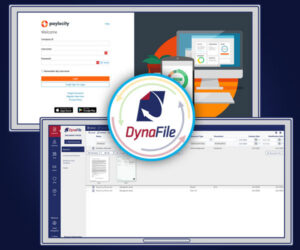
Integrating HR document management with HRIS platforms such as Paylocity allows organizations to connect employee documents directly to HR records.
These integrations help HR teams:
- Automatically link documents to employee profiles
- Reduce duplicate data entry
- Maintain consistent employee records across systems
- Streamline onboarding and compliance documentation
Many HR document management platforms support integrations with leading HR and payroll systems through dedicated HR software integrations.
When HR documents and HRIS data are connected, organizations gain a clearer and more complete view of employee records, improving both efficiency and compliance oversight.
5. Maintain Audit-Ready Document Trails for HR Compliance
Regulatory agencies may request employee records during compliance audits, investigations, or workplace disputes. Organizations must demonstrate that employee documentation is accurate, complete, and properly maintained.
Federal agencies such as the U.S. Department of Labor, the Equal Employment Opportunity Commission, and U.S. Citizenship and Immigration Services enforce recordkeeping requirements governing employee documentation and workplace compliance.
Modern HR document management systems support audit-ready documentation by maintaining detailed activity logs and document histories.
These systems allow HR teams to track:
- When documents were created or updated
- Who accessed or modified files
- Changes made to documentation over time
- Whether the required compliance documents are present
Modern HR document management systems maintain detailed audit trails that track document activity and access.
Audit-ready documentation allows HR teams to:
- Respond quickly to regulatory requests
- Verify document integrity and history
- Identify unauthorized access attempts
- Maintain transparency in employee record management
Instead of scrambling to locate files during an audit, HR teams can access organized records and document histories instantly.
HR Compliance Checklist for Employee Document Storage
Maintaining compliant employee records requires consistent document management practices. HR teams must ensure documents are organized, secure, and retained according to regulatory requirements.
Here are a few key compliance checkpoints HR teams should review regularly:
- Classify employee documents by type and retention requirements
- Secure sensitive records using role-based access controls
- Maintain detailed audit trails for document activity
- Integrate employee documents with HR systems
- Track document expiration and compliance deadlines
These are just a few elements of a comprehensive HR document compliance strategy.
For a complete step-by-step framework covering document classification, retention requirements, access controls, audit trails, and compliance automation, explore our full guide:
HR Compliance Checklist for Document Storage
Why HR Document Management Is Critical for Compliance
As regulatory requirements continue to evolve, HR departments are responsible for managing growing volumes of employee documentation while maintaining strict privacy and security standards.
Organizations that rely on manual filing systems or disconnected storage tools often struggle with:
- Incomplete employee files
- Inconsistent recordkeeping
- Security vulnerabilities
- Slow audit response times
Modern HR document management systems address these challenges by providing structured control over employee records.
These solutions help HR teams:
- Centralize employee documentation
- Protect sensitive information
- Automate document organization
- Integrate HR systems
- Maintain audit-ready records
By improving how employee documents are stored and managed, organizations can strengthen compliance while reducing administrative burden.
Final Thoughts
HR compliance is ultimately about maintaining accurate, secure, and accessible employee records.
When organizations adopt structured document management practices, HR teams gain greater control over documentation, improve audit readiness, and reduce compliance risk.
For many organizations, improving HR document management is one of the most effective ways to support both regulatory compliance and operational efficiency.
Improve HR Compliance with Better Document Management
Maintaining compliant employee records is becoming more complex as regulations evolve and organizations manage larger volumes of documentation.
Modern HR document management solutions help HR teams centralize employee records, protect sensitive information, automate document organization, and maintain audit-ready documentation.
DynaFile helps organizations simplify HR document management with secure employee file storage, automated document indexing, HRIS integrations, and role-based access controls designed for compliance.
See how DynaFile helps HR teams stay audit-ready.
Schedule a demo to learn how DynaFile improves HR document compliance.
Additional HR Compliance Topics HR Teams Should Understand
Effective HR document management supports compliance across many areas of employment law and regulatory oversight. HR teams must maintain accurate employee records to meet federal and state recordkeeping requirements tied to hiring, payroll, workplace safety, and employee relations.
Strong document management practices help organizations stay compliant with requirements related to:
- HR records retention requirements
- Employee personnel file management
- I-9 document compliance
- HR file security and access control
- Payroll recordkeeping requirements
- Employee documentation policies
- Workplace investigation documentation
- HR compliance documentation standards
- Employee file audit preparation
- Digital employee records management
Frequently Asked Questions: HR Document Management and Compliance
Q: What is HR document management?
A: HR document management refers to the systems and processes used to store, organize, secure, and retrieve employee records such as tax forms, contracts, performance reviews, and compliance documentation. Modern HR document management systems centralize employee records and help organizations maintain regulatory compliance.
Q: Why is document management important for HR compliance?
A: Proper document management ensures employee records are complete, secure, and accessible during audits or regulatory reviews. Without structured document management, HR teams may struggle with missing files, inconsistent recordkeeping, or delayed responses to compliance requests.
Q: What documents should HR keep for compliance?
A: Common compliance-related HR documents include:
- I-9 employment eligibility forms
- W-4 tax forms
- Employee contracts and agreements
- Disciplinary records
- Performance evaluations
- Payroll documentation
- Training and certification records
Retention requirements for these documents vary depending on regulations such as those from the EEOC, FLSA, OSHA, and USCIS.
Q: What is AI Document Intelligence in HR document management?
A: AI Document Intelligence refers to technology that uses artificial intelligence to automatically identify, classify, and organize HR documents. These systems can recognize document types such as employment forms, contracts, or evaluations and assign them to the correct employee record. By automating document indexing and organization, AI Document Intelligence helps HR teams maintain accurate employee files and improve compliance readiness.
Q: How do HR document management systems improve audit readiness?
A: HR document management systems improve audit readiness by centralizing employee records, maintaining detailed access logs, and ensuring documents are properly indexed and searchable. This allows HR teams to quickly provide required documentation during regulatory audits or investigations.